

The Most Underrated Exercise (And How to Make It Work)
Why Walking Is the Most Underrated Fat-Burning Exercise
When people think about losing weight, they often imagine grueling gym sessions, exhausting HIIT workouts, or expensive fitness classes. But here's the truth: one of the most effective, sustainable, and accessible weight loss tools has been right in front of us the whole time—walking.
Walking gets overlooked because it feels too simple. It doesn't feel like "real exercise." You won't get that post-workout high or feel completely drained. Yet this low-intensity, low-impact activity is proven to burn fat, build consistency, and fit seamlessly into any lifestyle. No equipment. No gym membership. No excuses.
The magic of walking lies in its sustainability. You can do it every day without injury, recovery time, or burnout. Combined with mindful nutrition tracking (which we'll explore later), walking becomes a game-changer for real, lasting weight loss.
The Science: How Many Calories Does Walking Actually Burn?
Let's talk numbers. The calories you burn walking depend on several factors: your body weight, walking speed, terrain, and duration. Here's what the data shows:
A 150 lb person burns approximately 100-150 calories walking at a moderate pace (3-4 mph)
The same person burns roughly 200-300 calories in an hour of steady walking
Walking at 4-5 mph increases burn to 250-400 calories per hour
But here's what makes walking even more powerful: it burns fat at a higher percentage than intense cardio. When you walk at a moderate pace, your body preferentially uses fat for fuel. That's why steady walking is sometimes called "fat-burning cardio."
10,000 Steps — Myth or Magic Number?
You've heard it everywhere: "You need 10,000 steps a day." But where did this number come from? Turns out, it's not some golden standard from exercise science. The 10,000-step target originated in 1960s Japan as a marketing slogan for a pedometer called the Manpo-kei (which means "10,000 steps meter").
The good news: research shows you don't need 10,000 steps to see real weight loss benefits. Studies indicate that 7,000-8,000 steps daily significantly improves health outcomes, reduces mortality risk, and supports sustainable weight management. Some research even shows benefits at 4,000-5,000 daily steps.
Here's the real magic number: consistency matters more than hitting a specific target. Walking 6,000 steps every single day beats walking 10,000 steps three times a week. Your body responds to regular, steady movement, not heroic efforts followed by rest.
That said, if you can comfortably work toward 10,000 steps and enjoy the routine, absolutely go for it. The best step target is the one you'll actually maintain.
Your 4-Week Progressive Walking Plan
Ready to start? Here's a structured approach that builds gradually. This plan assumes you're starting from a moderate baseline. Adjust based on your current fitness level.
| Week | Daily Target | Duration | Focus |
|---|---|---|---|
| Week 1 | 5,000 steps | 30 min | Establish routine, moderate pace, daily consistency |
| Week 2 | 6,500 steps | 35-40 min | Increase pace slightly, add one "brisk" day at 4-4.5 mph |
| Week 3 | 8,000 steps | 45 min | Two brisk days, incorporate gentle hills or varied terrain on one day |
| Week 4 | 9,000-10,000 steps | 50-60 min | Solidify habit, mix steady-state walks with two moderate-intensity sessions |
Tip: Use a phone, smartwatch, or fitness app to track steps. Visual progress is incredibly motivating.
Tips to Make Walking More Enjoyable
The most effective exercise is the one you actually do. Here are practical ways to make walking something you look forward to:
Walk in parks, along waterfront paths, or through neighborhoods you enjoy. Changing routes keeps your walks fresh and engaging.
Invite a friend, join a local walking group, or schedule walks with family. The conversation makes time fly.
Upbeat music, podcasts, or audiobooks transform walks into entertainment time. You might find yourself extending your route.
Morning walks energize your day and establish routine. Evening walks aid digestion and clear your mind. Pick what fits your life.
Use a habit tracker, calendar, or phone app. Seeing a chain of completed walks builds momentum and accountability.

Ready to Track More Than Just Steps?
Walking burns calories, but weight loss truly happens when you understand your complete nutrition. See what you're actually eating, and how it pairs with your movement.
Walking + Nutrition: The Winning Combination
Here's the hard truth: you can't out-walk a poor diet. Walking 10,000 steps while eating unconsciously won't move the needle on weight loss. But walking + intentional nutrition choices? That's where transformation happens.
Walking addresses the movement side of the equation. For weight loss to actually occur, you need to understand what you're eating. This isn't about restriction or deprivation—it's about awareness. When you know how much you're eating and how it aligns with your goals, you make better choices naturally.
Here's how the combination works:
The power isn't just the calories burned during walks. Walking also:
- Reduces cravings and emotional eating
- Improves sleep quality, which stabilizes hunger hormones
- Boosts mood and reduces stress-related overeating
- Increases metabolic awareness and body connection
When you combine this with tracking what you eat—seeing portions, understanding macros, and adjusting as needed—you've created a sustainable system. No extreme measures. No "all or nothing" mentality. Just consistent walking and conscious eating working together.
How CapyCal Tracks It All Together
Walking is just one part of the weight loss equation. The other part—and frankly, the more controllable part—is understanding your nutrition.
This is where CapyCal comes in. Our app makes nutrition tracking simple, judgment-free, and integrated with your health data.
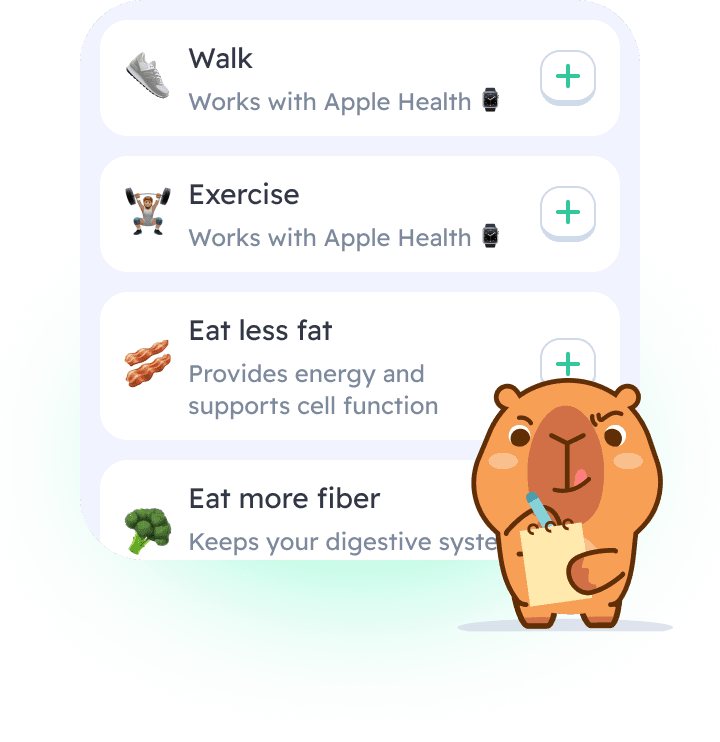
Apple Health Sync
CapyCal connects directly to Apple Health, automatically importing your step counts, distance walked, and active calories burned. You don't manually log your walks—they sync seamlessly. You can see exactly how many calories your walking routine burns every single day.
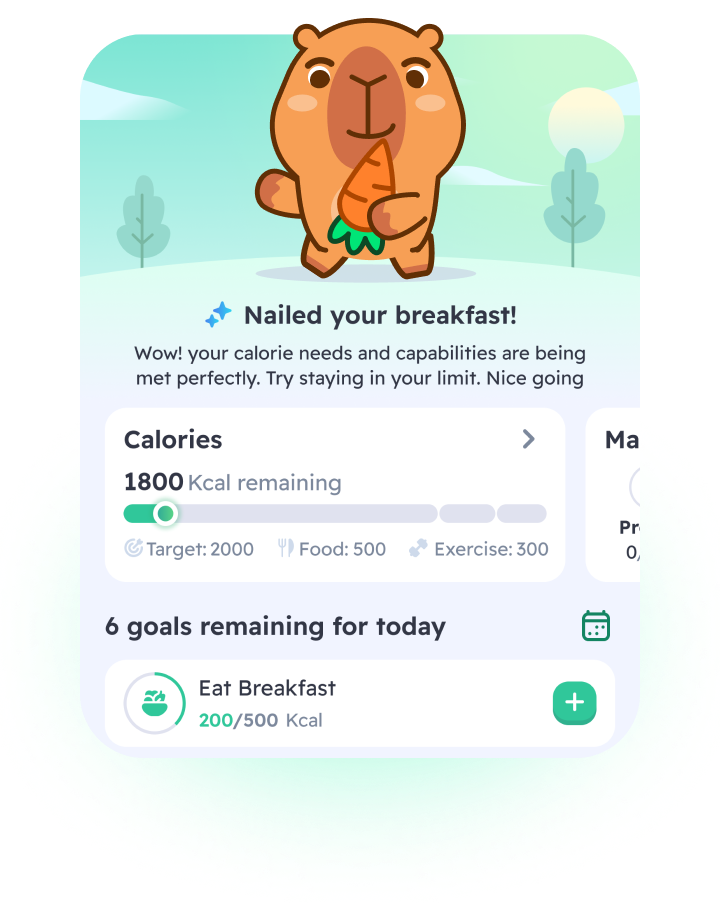
Nutrition Tracking That Actually Works
Unlike overwhelming food logging apps, CapyCal focuses on simplicity. Log your meals, see your macro and calorie totals, and understand your actual consumption patterns. The goal isn't perfection—it's awareness.
When you combine visible walking progress with food awareness, something shifts. You're not just exercising and hoping for results. You're actively making informed choices. You can see: "I walked 8,000 steps today and ate within my targets—I'm moving in the right direction."
The Results: Science + Simplicity
Users who combine daily walking with consistent nutrition tracking in CapyCal report:
- Average 1-2 pound weight loss per week
- Improved energy and mood
- Better sleep quality
- Sustainable habits that stick beyond 12 weeks
The magic isn't in any single tool or trick. It's in consistency: showing up to walk every day, eating with awareness, and using CapyCal to connect the dots.
Your Weight Loss Journey Starts with a Single Step
Walking is accessible, free, and incredibly effective. Add nutrition awareness with CapyCal, and you have a complete system for sustainable weight loss.
The Bottom Line
Walking is underrated because it's simple. It doesn't come with before-and-after transformations or viral fitness trends. But science consistently shows that daily walking, combined with mindful eating, creates real, lasting weight loss.
You don't need 10,000 steps or an hour-long workout. You need consistency. You need a route you enjoy. You need to understand what you're eating. And you need tools that make tracking effortless—which is exactly what CapyCal provides.
Start this week. Aim for 5,000-6,000 daily steps. Track your meals in CapyCal. Watch your walking data sync automatically. In four weeks, you'll be amazed by what consistency accomplishes.
The best time to start was yesterday. The second-best time is today.