

This distinction isn't about judgment. It's about information. When you know the difference, you can respond with what your body or heart actually needs.
Common Triggers: What Really Drives Emotional Eating
Emotional eating rarely happens in a vacuum. Usually there's a trigger—something that tips the emotional scale and sends you toward food. Recognizing your personal triggers is powerful self-awareness.
Stress and Overwhelm
Work deadlines. Family conflict. Too many things on your plate. When your nervous system is activated, food becomes a way to soothe it. High-fat, high-carb foods are particularly appealing because they genuinely do calm your system (temporarily).
Boredom
Boredom isn't just "having nothing to do." It's a lack of stimulation that feels uncomfortable. Food provides something to do, a sensory experience, a mini-reward. It fills the void.
Loneliness
Food can be a companion. It's always there. It never disappoints or argues. When you're feeling disconnected from others, eating can feel like self-nurturing, like giving yourself what someone else might.
Celebration (and Complex Emotions)
We also eat emotionally when things are good. Celebrations, milestones, happy moments—these trigger emotional eating too. And sometimes our triggers are mixed: you might be celebrating a win but also processing underlying anxiety. Food helps you sit with the complexity.
Why Guilt Makes Everything Worse (The Shame Spiral)
Here's something critical: guilt after emotional eating doesn't prevent future emotional eating. It creates a cycle that makes things worse.
You're stressed → you eat → you feel guilty → the guilt creates more stress and sadness → you eat again to cope with the guilt and stress. The guilt becomes another emotion to manage.
This is the shame spiral. And it's one of the most important things to interrupt.
Breaking the cycle starts with radical self-compassion. This doesn't mean avoiding any awareness or accountability. It means treating yourself with the same kindness you'd give a good friend. Your friend ate when stressed? You'd probably say, "That's so understandable. You've been through a lot. What do you need right now?" That same voice matters for you.
Strategies That Actually Help (Beyond "Just Stop")
Okay, let's talk solutions. But not the "stop eating when you're sad" kind of solution (that's not real life). Here are gentle, practical strategies that actually address the root:
Pause and Notice
When you reach for food, pause for 30 seconds. Not to shame yourself or stop yourself—just to notice. Am I actually hungry? What am I feeling right now? This tiny gap creates awareness.
Journal Without Judgment
Write about what you're feeling before eating. "I'm stressed about the deadline," or "I miss my mom today." Just naming the emotion matters. You might eat anyway, and that's okay—at least you know why.
Find a Gentle Alternative First
Before reaching for food, try something else: a 5-minute walk, a phone call to a friend, deep breaths, a warm shower. Not to deny yourself food, but to truly check in with what might help.
Honor Your Feelings
Sometimes the answer isn't to avoid eating—it's to acknowledge what you're feeling deserves care. If eating brings you comfort and that's what you need right now, that's valid. You're not "failing."
Connect with Others
Loneliness and isolation amplify emotional eating. A text to a friend, a walk with someone you care about, or just being around people can genuinely reduce the urge to eat emotionally.
Build Variety into Your Toolbox
Have multiple ways to regulate emotion: music, movement, art, time in nature, meditation. The more tools you have, the less you'll rely only on food.
Awareness, Not Restriction, Is the Real Solution
Here's what we know from thousands of people who've built a healthier relationship with food: awareness without judgment changes things.
When you're not busy shaming yourself, you actually develop insight. You notice patterns. You start to see, "Oh, I always eat this when I feel rejected," or "Stress eating is my go-to when I haven't slept well." And with that awareness comes choice. Real, sustainable choice.
You might still eat emotionally sometimes. And that might be completely okay. The goal isn't perfection. It's understanding your own patterns, building a kind and curious relationship with them, and having options.
Being Kind to Yourself—A Gentle Visual Reminder
This journey is about kindness. To yourself. To your body. To the very human, very understandable ways you cope with being alive.

Your body isn't something to fight against. Your emotions aren't something to suppress. Food isn't an enemy. This gentle, accepting approach—where you meet yourself with compassion instead of criticism—is what actually creates lasting change.
Ready to understand your relationship with food better?
CapyCal helps you notice patterns without judgment. Track your emotions, not just meals, and build genuine awareness.
Start with CapyCalHow CapyCal Supports a Kind Relationship with Food
Emotional eating thrives in secrecy and shame. It diminishes when you shine a gentle light on it.
CapyCal is designed with this in mind. Instead of rigid food rules or judgment, CapyCal helps you:
- Notice patterns over time — See when and why you eat emotionally without shame
- Track emotions alongside food — Connect the dots between your feelings and eating habits
- Reflect with our journaling tools — Use the small, simple journaling feature to process emotions
- Build genuine awareness — The kind that leads to real, lasting change (not restriction)
- Feel supported, not judged — Our entire philosophy is "Feel Good. Not Guilty."
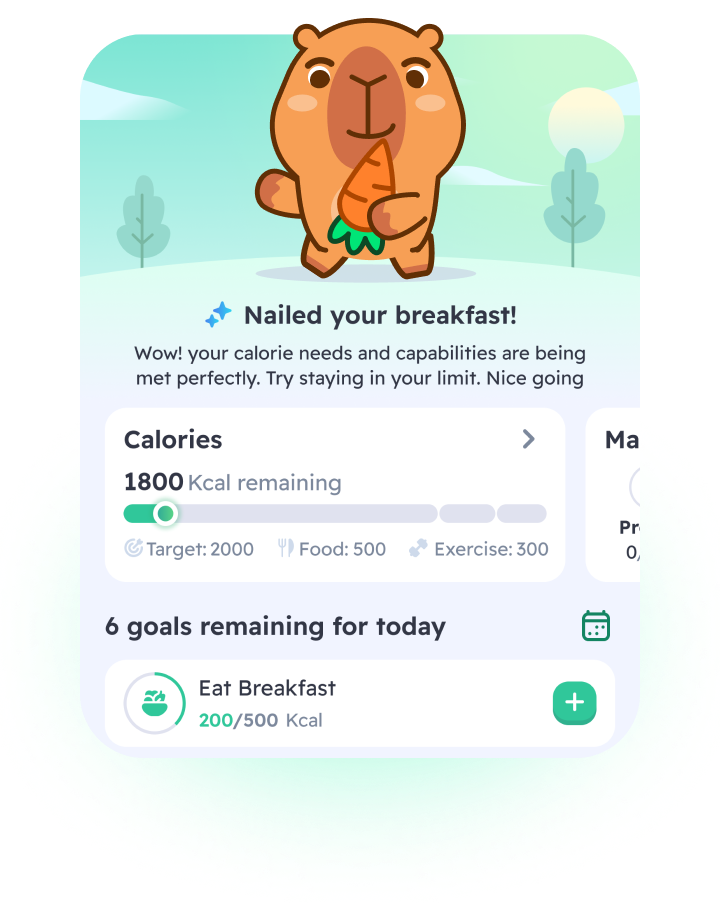
The insights that come from gentle self-observation often matter more than restriction ever could. When you understand your own patterns, you get to choose—not from a place of shame, but from genuine self-knowledge.
Journaling: Your Secret Weapon for Awareness
One of the most powerful practices is journaling. Not calorie counting. Not food "logging" in the traditional sense. But reflecting on what you're eating and why.

Before you eat (especially when you think it might be emotional), write down: "What am I feeling right now?" After eating, reflect: "Did food help? What do I actually need?" Over time, patterns emerge. You see that you eat when you're tired, or when you're avoiding a difficult conversation, or when you're celebrating. This awareness is transformative.
And here's the magic: when you journal with curiosity instead of judgment, shame loses its power. You're not "bad for eating." You're a human being who eats for different reasons at different times—and that's completely normal.
Your journey toward kindness starts here
CapyCal makes it easy to understand your patterns and feel good about yourself—not guilty. Join thousands of people who are building a genuinely healthier relationship with food.
Get Started with CapyCalThe Bottom Line: You're Not Alone
Emotional eating is one of the most common human experiences. You're not broken. You're not out of control. You're navigating the very real intersection of emotions and food, which is something everyone does.
The path forward isn't about restriction or perfectionism. It's about understanding yourself. It's about meeting your own emotions with compassion. It's about building tools and awareness so that food becomes what it should be: nourishment, pleasure, and sometimes comfort—without the weight of shame.
You deserve to feel good about yourself. And with CapyCal—and with the kindness you deserve—you will.