
Why how you track your food matters as much as what you track—and why the kindest approach is often the most effective.
There's a persistent myth about food tracking: that it's supposed to make you feel disciplined, guilty, and somewhat ashamed of your choices. That seeing your numbers "go over" should sting. That tracking is a form of self-policing—evidence of how well you can stick to a plan.
But what if that's exactly backwards? What if the most powerful tool for building a genuinely healthy relationship with food is one that makes you feel *better*, not worse? One that treats data as information instead of judgment?
This is what guilt-free food tracking really means. And research increasingly supports what many of us intuitively know: compassion works better than criticism, even when we're criticizing ourselves.
The Tracking Paradox: Why Most Trackers Make You Feel Worse
Most food tracking apps work the same way. You log your meals, they show you a number, and somewhere in the design is an implication: *did you do good or bad today?* Green when you're "under budget." Red when you're "over." A sense of success or failure attached to how closely you matched a target number.
The problem? This design—however well-intentioned—activates shame instead of curiosity. It replicates the exact psychological dynamic that makes people obsessive about food in the first place: the idea that your worth as a person is connected to your food choices.
And then something fascinating happens. People who feel shame around food tend to make *worse* choices, not better ones. When you've already "failed" by going over your target, the psychological permission to eat without restriction kicks in. "I've already messed up, might as well keep going." It's called "counter-regulatory eating," and it's a direct response to guilt.
The paradox: the app designed to help you make better choices actually triggers the exact behavior it's trying to prevent. The guilt becomes the problem, not the solution.
The Science: Self-Compassion Actually Works Better
Here's what research on behavior change keeps showing us: compassionate approaches create more durable change than punitive ones. This is true for weight management, addiction recovery, mental health, and basically every domain of human behavior.
A landmark study at the University of Toronto found that people who practiced self-compassion—accepting their mistakes without judgment—were *more* likely to maintain healthy behaviors long-term. Not because they were harder on themselves, but because they didn't get stuck in shame cycles that lead to "giving up" entirely.
When you eat something outside your plan and respond with kindness ("I enjoyed that, now let me refocus") versus shame ("I'm such a failure, I can't do anything right"), your brain chemistry is different. The shame response triggers cortisol, which increases inflammation and ironically makes you crave comfort foods. The self-compassion response is tied to parasympathetic nervous system activation—calm, focused, and resilient.
In other words: treating yourself kindly isn't soft or weak. It's actually the more sophisticated, scientifically-backed approach to lasting change.
Red Flags: When Food Tracking Becomes Unhealthy
Not all food tracking is created equal. Some patterns are signs that tracking has shifted from a helpful tool to a source of anxiety. These red flags matter:
Obsessive Precision
You're weighing every crumb. You know your macros to the decimal point. You panic if you're even 50 calories off. Food tracking is supposed to give you *information*—not create paralysis. Nutrition is a range, not an exact science.
Anxiety About "Going Over"
You feel genuine dread when you see numbers creep toward your limit. You avoid social eating because you can't track it perfectly. You feel you have to "earn" food through exercise. These are signs that tracking has become restrictive and shame-based.
Food Guilt and Avoidance
You avoid logging certain foods because you know it will make you feel bad. You eat them anyway, but secretly. Or you skip them entirely, even when you want them. This secrecy is a sign that the tracker has become a source of judgment rather than information.
Disconnection from Your Body
You're following the numbers instead of listening to hunger, fullness, and satisfaction cues. You override your body's signals because the app says you're "under" on carbs. This is the opposite of building a healthy relationship with food.
If you recognize yourself in these patterns, it's not a failure on your part. It's a signal that your tracking tool isn't serving you. And that's worth changing.
What Guilt-Free Food Tracking Actually Looks Like
Guilt-free tracking is fundamentally different in how it approaches data. Instead of judgment, it offers awareness. Instead of report cards, it offers information. Here's what it actually means:
Awareness Without Judgment
You log what you eat with honest curiosity, not shame. If you ate something high in sugar, that's information—not evidence that you're bad. The tracking becomes about understanding your patterns, not condemning yourself.
Data as Information, Not Morality
Your numbers don't define you. They're data points. A day where you go over your protein target isn't a "bad day." It's a day where you ate differently. Some days you'll eat more. Some days less. The tracker helps you see the pattern over weeks and months, not obsess over daily fluctuations.
Progress Over Perfection
Guilt-free tracking celebrates progress, not perfection. You notice over time that you're eating more whole foods, feeling better, sleeping deeper, or recovering faster from workouts. These are the real wins—not hitting your targets to the gram every single day.
Aligned With Your Values
The tracker reinforces what actually matters to you. If you value mindfulness around eating, your tracker celebrates that you're paying attention. If you value strength training, it helps you see whether you're eating enough to support your workouts. The tool adapts to *your* goals, not the other way around.
Tracking That Feels Good
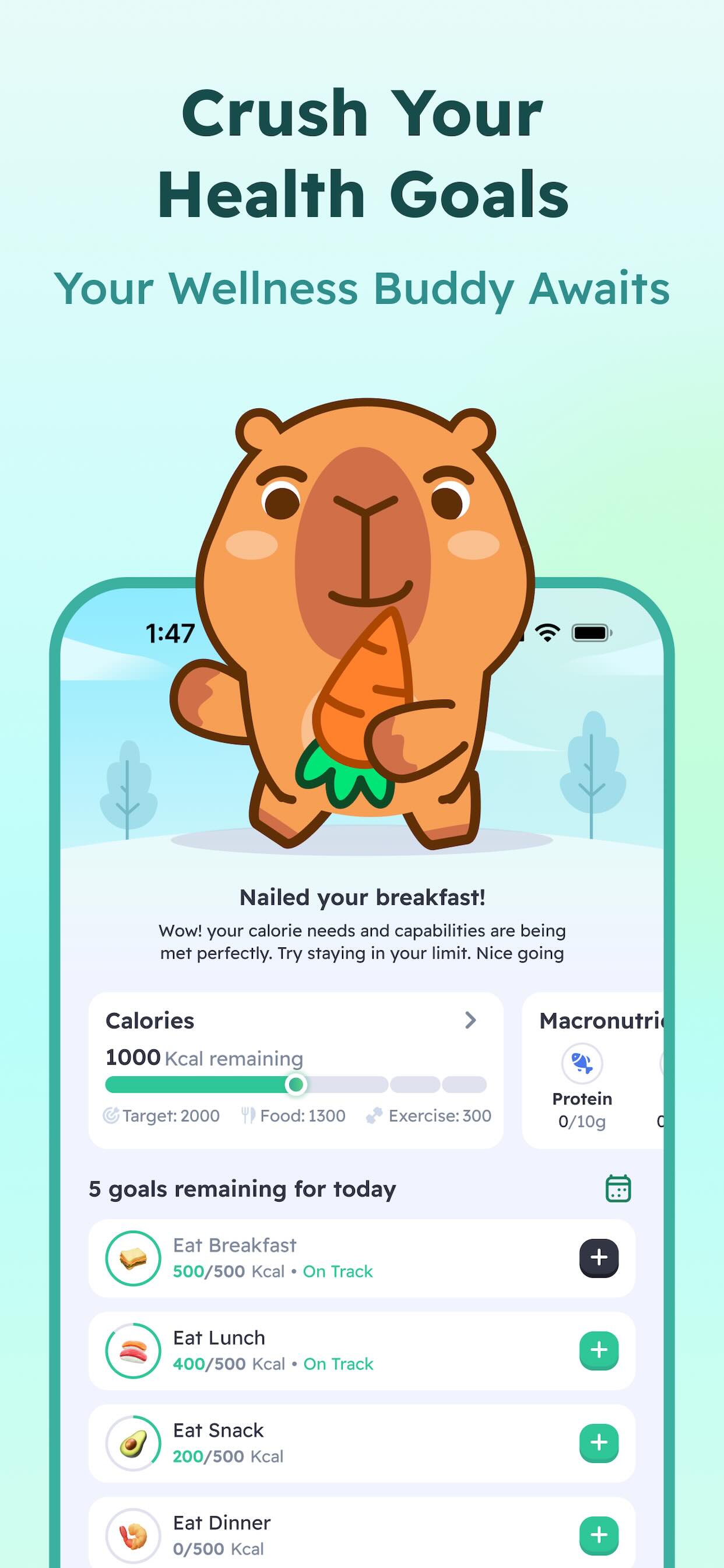
CapyCal is built on the philosophy that food tracking shouldn't make you feel guilty. We designed every feature around kindness.

How CapyCal Was Designed Differently: The Companion, Not the Coach
When we started building CapyCal, we asked ourselves a different question than most app makers do. Not "how can we maximize compliance?" but "how can we make food tracking feel genuinely good?"
Every design decision came back to one principle: **Feel Good. Not Guilty.** Here's what that looks like in practice:
Capy Never Scolds You
There are no red warnings when you "go over" a target. No judgment in the interface. No messages about how you messed up. We designed with the belief that you don't need a nagging voice in your pocket. You need a companion.
Encouragement-First Design
When you log consistently, the app celebrates it. When you notice patterns in how different foods make you feel, we help you understand them. The feedback is about progress and self-knowledge, never shame.
AI That Works With You, Not Against You
Our AI learns your preferences and patterns, but it never makes you feel bad about them. You want pasta for dinner? Great. The tracker helps you log it accurately and understand how it fits into your bigger picture. No guilt required.
A Tool for Self-Understanding
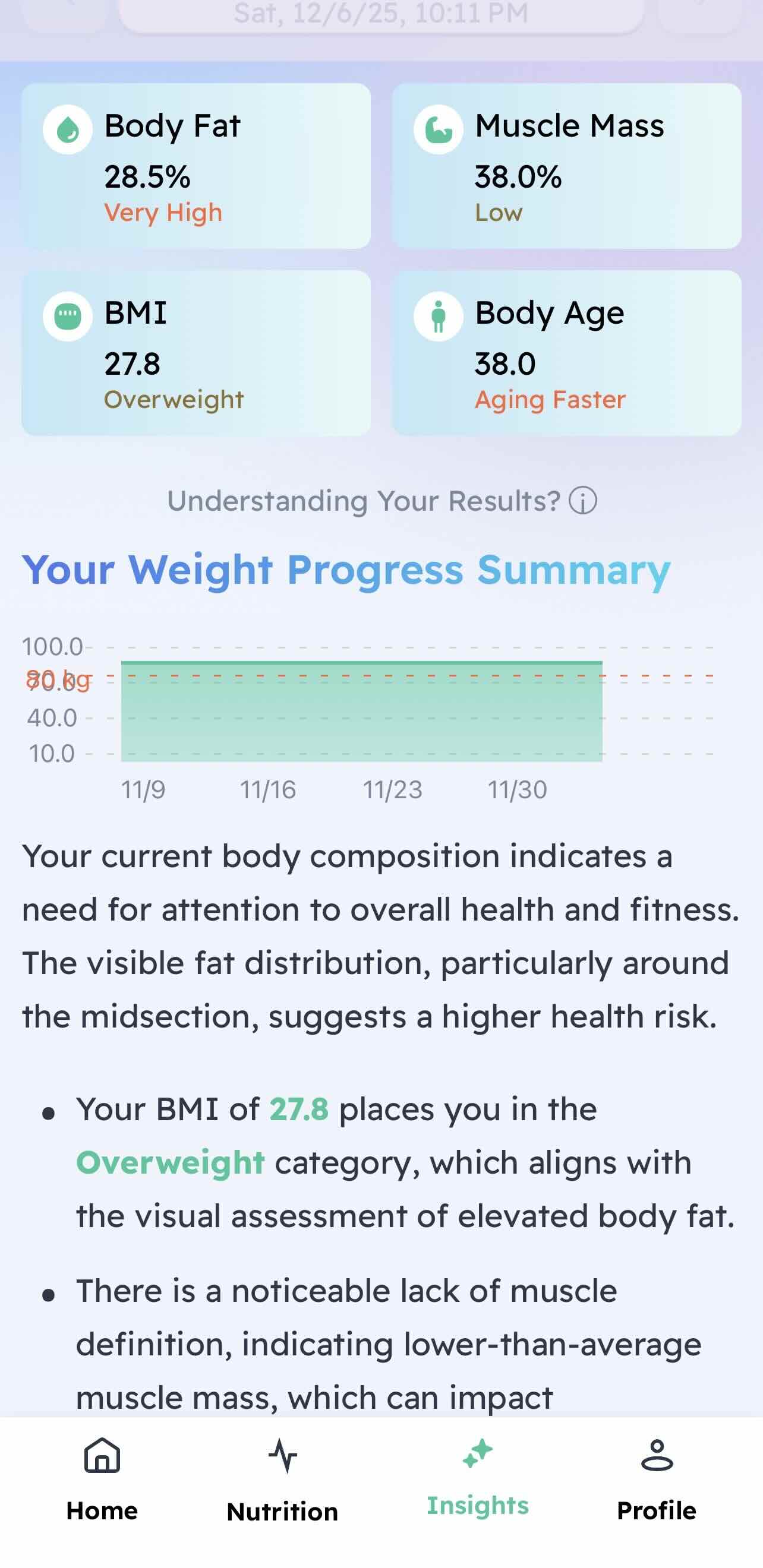
CapyCal's real power is in helping you understand *yourself*—how different foods affect your energy, sleep, digestion, and mood. That self-knowledge is what drives lasting change, not restrictive rules.

Meet Capy — Your Kindness-First Wellness Companion
Capy is built on a different philosophy: your wellness journey shouldn't involve guilt or shame. Our happy capybara companion is here to help you build awareness without judgment, understanding without criticism, and lasting change through self-compassion.
Building Your Healthiest Relationship With Food
The deepest level of health isn't about hitting targets. It's about having a relationship with food where you can enjoy it, understand it, and trust yourself around it. Tracking—done right—supports exactly that.
Food tracking becomes transformative when it shifts from punishment to information. When it moves from "am I good enough?" to "what can I learn?" When it creates space for self-compassion instead of self-criticism.
This doesn't mean anything goes. It means you can track your intake, notice patterns, and make choices that align with your values—all without the guilt. It means you can eat the cookie and enjoy it, log it, and move on without a shame spiral. It means you can build the exact relationship with food that leads to lasting, effortless change.
That's not soft or permissive. That's actually the most powerful approach to wellness there is.
Ready for Guilt-Free Food Tracking?
Download CapyCal and discover what food tracking feels like when it's designed with compassion—for you, and for your wellness journey.
The Bottom Line: How You Track Matters
Food tracking is a tool. Like any tool, everything depends on how you use it. It can become a source of shame and obsession. Or it can become a source of self-knowledge and compassion.
The approach you choose makes all the difference. The kindest approach—the one grounded in research on behavior change—is also the most effective. Self-compassion doesn't undermine results. It enables them.
So the next time you're about to log what you ate, remember: this isn't about judgment. It's about awareness. It's not about being "good" or "bad." It's about understanding yourself better. And it's absolutely okay to be kind to yourself in the process.
That's what guilt-free tracking really means.