
A beginner's guide to understanding protein, carbs, and fats—and why a smarter macro tracker app makes all the difference.
If you've ever felt overwhelmed by nutrition talk, you're not alone. The phrase "track your macros" gets thrown around like everyone has a spreadsheet open at lunch, calculating grams of protein and carbs. But here's the truth: how to track macros doesn't have to be complicated. In fact, once you understand what you're actually tracking, it becomes less about obsession and more about curiosity—and feeling genuinely good about what you eat.
Whether you're getting in shape, managing energy levels, or just want to eat more intentionally, macro tracking is one of the most straightforward tools available. This guide walks you through everything you need to know—without the guilt, without the stress.
What Are Macros, Actually?
Macros is short for macronutrients. There are three: protein, carbs, and fats. That's it. Every food you eat falls into one of these categories (or a combination).
Protein
Protein builds and repairs muscle, keeps you full, and supports basically every function in your body. Sources include chicken, fish, eggs, Greek yogurt, beans, tofu, and nuts. Each gram of protein has 4 calories.
Carbohydrates (Carbs)
Carbs give your body and brain energy. They're found in bread, pasta, rice, fruit, vegetables, and sweets. They get a bad reputation they don't deserve—whole grains and fruit are incredibly nutritious. Each gram has 4 calories.
Fats
Fats are essential for hormones, brain health, and absorbing certain vitamins. Olive oil, avocado, fatty fish, nuts, and seeds are all great sources. Each gram has 9 calories (that's why they're more calorie-dense than protein and carbs).
Why Track Macros?
You don't *have* to track macros. But there are solid reasons people choose to:
- Clarity: You learn what's actually in your food. No guessing.
- Energy: Different macro ratios affect how you feel throughout the day. Finding yours matters.
- Performance: If you exercise, eating enough protein and carbs directly supports your training.
- Progress: If you have a specific goal—building strength, running faster, feeling stronger—macros are a lever you can adjust.
- Peace of mind: Tracking removes the anxiety of "am I eating enough?" or "am I eating too much?"
Notice what's *not* on this list: punishment, restriction, or guilt. Macro tracking with the right mindset is about empowerment, not deprivation.
Common Macro Tracking Mistakes
Before you start, let's talk about what *not* to do. These mistakes are why tracking can feel stressful—but they're all avoidable.
Obsessing Over Precision
You don't need to hit your targets exactly. If you aim for 150g of protein and hit 145g, you're fine. Nutrition is a range, not an exact science. Most people find that being within 5-10% of their target is enough.
Forgetting the Whole Picture
Macros matter, but they're not the only thing. Micronutrients (vitamins, minerals), fiber, and food quality still count. A meal that hits your macro targets but lacks whole foods won't feel as good or satisfy you as much.
Treating Food as the Enemy
If tracking makes you feel guilty or anxious, something's wrong. The whole point is to feel *better*, not worse. If you catch yourself spiraling, step back and remember: nutrition is long-term, not daily.
Tracking Shouldn't Be Hard
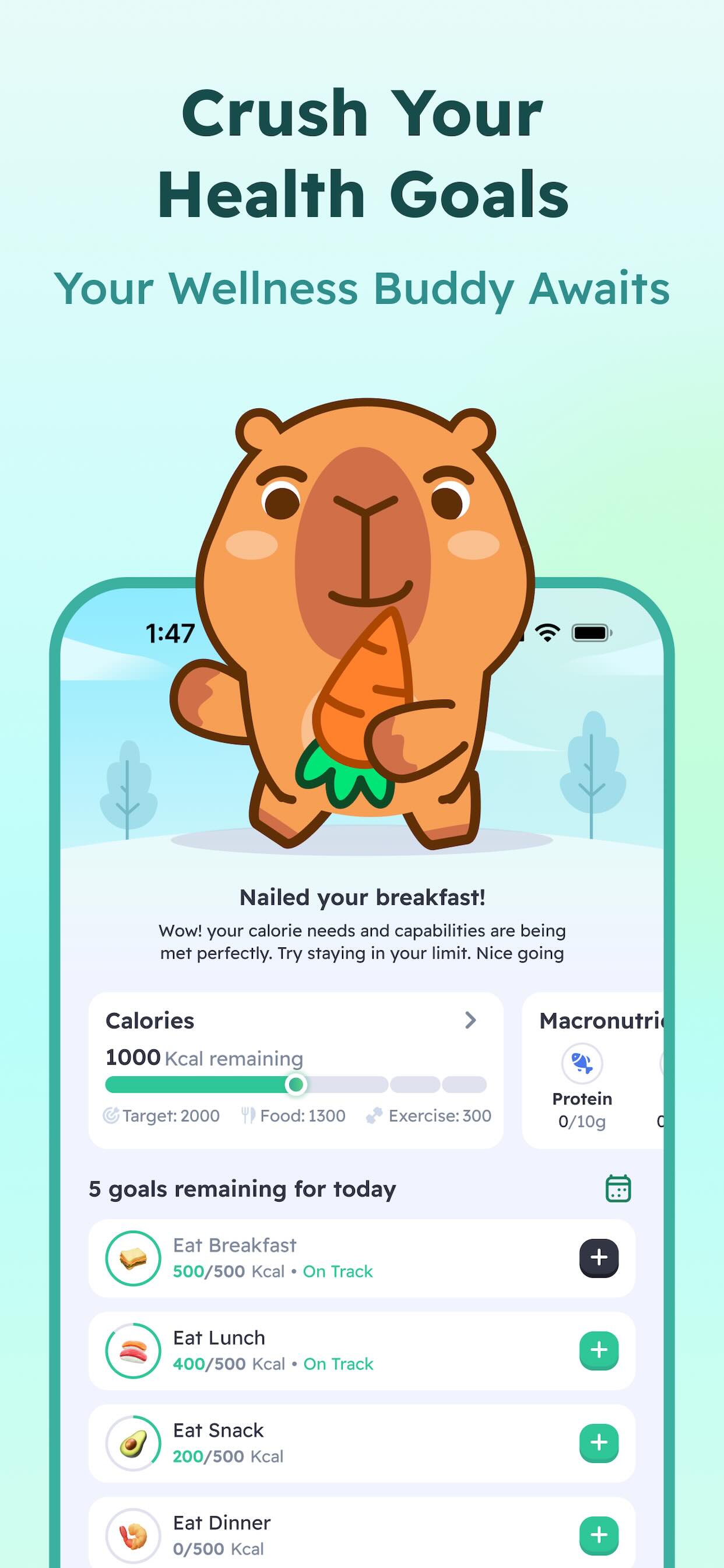
CapyCal uses AI to make macro tracking feel effortless. Snap a photo of your meal, and we handle the rest.


Meet Capy — Your Wellness Buddy
Tracking macros doesn't have to be stressful. Capy, your friendly AI capybara buddy, makes understanding your protein, carbs, and fat feel effortless and even fun.
How to Track Macros Without Stress
Now for the practical stuff. Here's how to do it well:
1. Set a Realistic Target
Your target depends on your goals and body. A rough starting point: 0.7–1g of protein per pound of body weight, fill the rest with a mix of carbs and fats. But honestly? Start with what feels sustainable. You can adjust after a week or two.
2. Use a Macro Counter App
Manual tracking is exhausting. A good macro counter app does the math for you. Look for one that has an extensive food database and makes logging quick—ideally less than 30 seconds per meal.
3. Start Simple
You don't need to log every single snack. Many people find success tracking their main meals and rough estimates for the rest. Perfect is the enemy of done.
4. Build a Routine
Log at the same time each day (many people do it while eating). Make it a habit, not a chore. After two weeks, it becomes automatic.
5. Notice Patterns, Not Just Numbers
After a few weeks, look for patterns. Do you feel best with higher carbs? Does extra protein help your workouts? This information is gold. Adjust based on *how you feel*, not just the numbers.
How CapyCal Makes Macro Tracking Easy
Here's where nutrition tracking gets smarter. Most macro tracker apps are clunky—lots of searching, lots of scrolling, lots of friction. That's why we built CapyCal differently.
CapyCal uses AI to recognize meals from a photo. Snap a picture of your breakfast, and it identifies what's there and estimates the macros. No manual searching. No guessing. No stress.
You still have full control—adjust the portions, correct any estimates, or log manually if you prefer. But most of the time, the AI gets it right on the first try. That means you can keep your focus where it matters: on enjoying your food and feeling your best.
The whole philosophy behind CapyCal is simple: "Feel Good. Not Guilty." Nutrition should add to your life, not subtract from it. When how to track macros becomes this easy, it actually becomes *fun* to learn how your body responds to different foods.
Ready to Track Without the Stress?
Download CapyCal today and make macro tracking part of your routine—the easy way.
The Bottom Line
Macro tracking doesn't have to be stressful. Understanding protein, carbs, and fats gives you a language to talk about nutrition. Using the right tools—especially a smart macro tracker app—removes the friction. And paying attention to how you *feel* makes it all meaningful.
Start small. Be consistent. Adjust based on results and how you feel. That's it. You don't need perfection; you need progress. And with each week, you'll understand your body better and feel more confident about your choices.
Your body will thank you. So will your peace of mind.