
Nutrition labels don't have to be intimidating. We're breaking down every section so you can make confident food choices—and finally understand what all those numbers actually mean.
You're standing in the grocery store, holding a box of cereal, and you flip it over to check the nutrition label. Your eyes scan a wall of numbers and percentages, and you think: "I have absolutely no idea what I'm looking at."
You're not alone. Nutrition labels can feel like a foreign language—especially if you're just starting to pay attention to what you eat. But here's the good news: reading a nutrition label doesn't require a nutrition degree. It just requires knowing what to look for.
In this guide, we're breaking down every section of the nutrition label in a way that actually makes sense. By the end, you'll know exactly how to read one—and more importantly, you'll know what information actually matters for your goals.
Why Nutrition Labels Matter (But Don't Have to Be Confusing)
A nutrition label is basically the nutrition "facts" about what's inside the package. It tells you:
- How much energy (calories) is in each serving
- How much protein, carbs, and fat the food contains
- How much sugar, fiber, and sodium are present
- What percentage of your daily recommended amount each nutrient represents
Understanding these numbers helps you make informed choices about what you're eating. It's not about judgment or perfection—it's about knowing what you're putting in your body and whether it aligns with how you want to feel.
Serving Size — The Most Overlooked Part
Here's something that trips up almost everyone: the nutrition label is based on a serving size, not the entire package. And serving sizes aren't always what you'd actually eat.
Let's say a box of crackers has 8 servings per box. The calorie count on the label? That's for one serving, not the whole box. If you eat half the box (which, let's be honest, happens), you need to double all the numbers.
This is why serving size is the first thing you should look at. Some foods have serving sizes that are weirdly small (like only eating 7 chips from a bag) while others are more realistic. Use the serving size as your reference point, then adjust based on how much you're actually eating.
Calories — What They Mean and What They Don't
Calories are units of energy. They measure how much energy a food provides. Simple as that.
But here's what calories are not: they're not a measure of health, and they're not the only thing that matters. A food high in calories isn't "bad," and a food low in calories isn't "good." A handful of almonds has more calories than a bowl of lettuce, but the almonds come with protein, healthy fats, and minerals. Context matters.
When you're reading a label, look at the calories as one piece of the puzzle. If you're trying to feel energized and satisfied, you might pair a lower-calorie vegetable with a higher-calorie protein source. Balance is the goal, not restriction.
The Big 3 Macros (And Why They're Worth Understanding)
Macronutrients (or "macros") are the big-picture nutrients your body needs:
Protein
Protein helps build and repair muscle, keeps you feeling full longer, and is essential for basically every function in your body. If you're active or trying to feel more satisfied between meals, protein is your friend. Most labels show protein in grams—aim for foods that have a decent amount relative to the calories.
Carbohydrates
Carbs get a bad rap, but they're your body's preferred energy source. They fuel your workouts, your brain, and your daily activities. The label breaks carbs into total carbs, fiber, and sugar—and we'll talk more about those next.
Fat
Fat is essential for hormone production, brain health, and absorbing certain vitamins. It's also calorie-dense (9 calories per gram, compared to 4 for protein and carbs), so it adds up quickly. Look for foods with unsaturated fats (from sources like olive oil, nuts, and fish) rather than saturated fats when possible.
Sugar, Fiber, and Sodium — What to Watch
These three nutrients deserve special attention:
Sugar
The label shows "added sugars" separately from natural sugars (like those in fruit). Added sugars are the ones to be mindful of—not because they're "evil," but because they add calories without much nutritional benefit and can leave you feeling less satisfied. A yogurt with 15g of added sugar might spike your energy and then crash it. One with 2g might keep you stable longer.
Fiber
Fiber is amazing. It helps you feel full, keeps your digestion smooth, and stabilizes your energy. More fiber in a food is almost always a good thing. If a food has at least 3g of fiber per serving, consider it a win.
Sodium
Your body needs some sodium, but most of us get more than we need from processed foods. If sodium is something you're watching (maybe you bloat easily or have blood pressure concerns), check the label. But if you eat mostly whole foods with occasional processed items, it's not something to obsess over.
% Daily Value — How to Use It
The "% DV" (% Daily Value) column on the right side of the label is based on a standard 2,000-calorie diet. It tells you what percentage of your daily recommended amount of that nutrient is in one serving.
Here's a simple rule of thumb:
- 5% or less: Low in that nutrient
- 20% or more: High in that nutrient
Use this for nutrients you want more of (like fiber and protein) and nutrients you want to limit (like sodium and saturated fat). If a food has 40% of your daily fiber, that's great. If it has 60% of your daily sodium in one serving, that's something to be aware of.
Common Label Tricks (Marketing vs. Reality)
Food companies are smart about marketing. Here are some common tricks to watch out for:
- "Low-fat" or "fat-free": These often have added sugar to compensate for taste. Check the label—it might have more calories than the regular version.
- "Natural" or "made with real fruit": These are mostly marketing buzzwords. Real fruit could mean 5% fruit juice in a sugar-heavy product.
- "Multigrain": This doesn't necessarily mean whole grain. Check if the first ingredient is a whole grain.
- "High in [nutrient]": This means at least 20% Daily Value. It might still not be enough for a food to be considered healthy overall.
- Serving size magic: Companies sometimes make serving sizes tiny to make the nutrition numbers look better. Always check how much you're actually eating.
How CapyCal Makes Label Reading Unnecessary (But Knowing Helps)
Here's the thing: understanding nutrition labels is empowering. It helps you make informed choices. But we also know that analyzing every label can be exhausting.
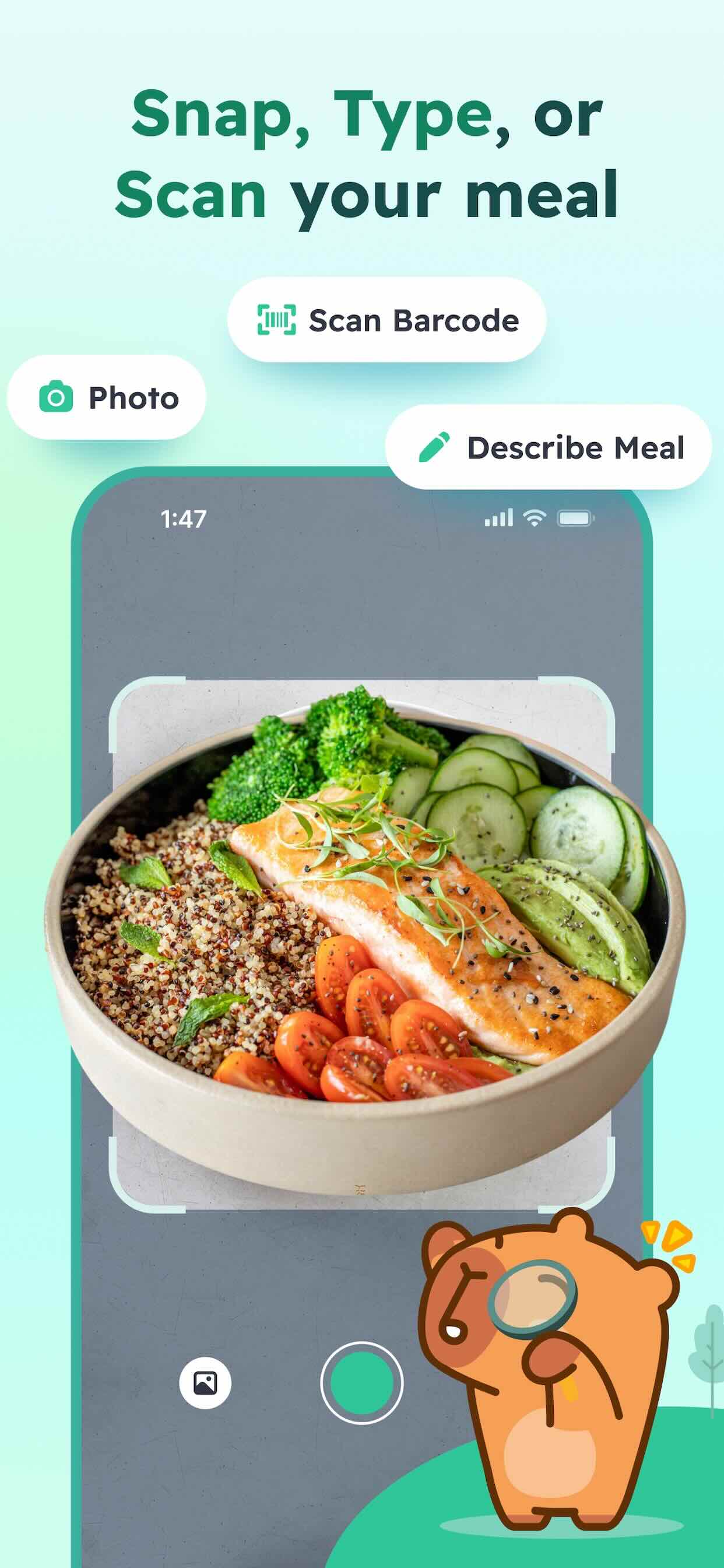
That's where CapyCal comes in. Instead of reading and manually entering nutrition data from labels, you can simply snap a photo of the food or its label. Our photo AI recognizes what you're eating and auto-logs it—instantly pulling the nutrition data so you don't have to hunt for it.
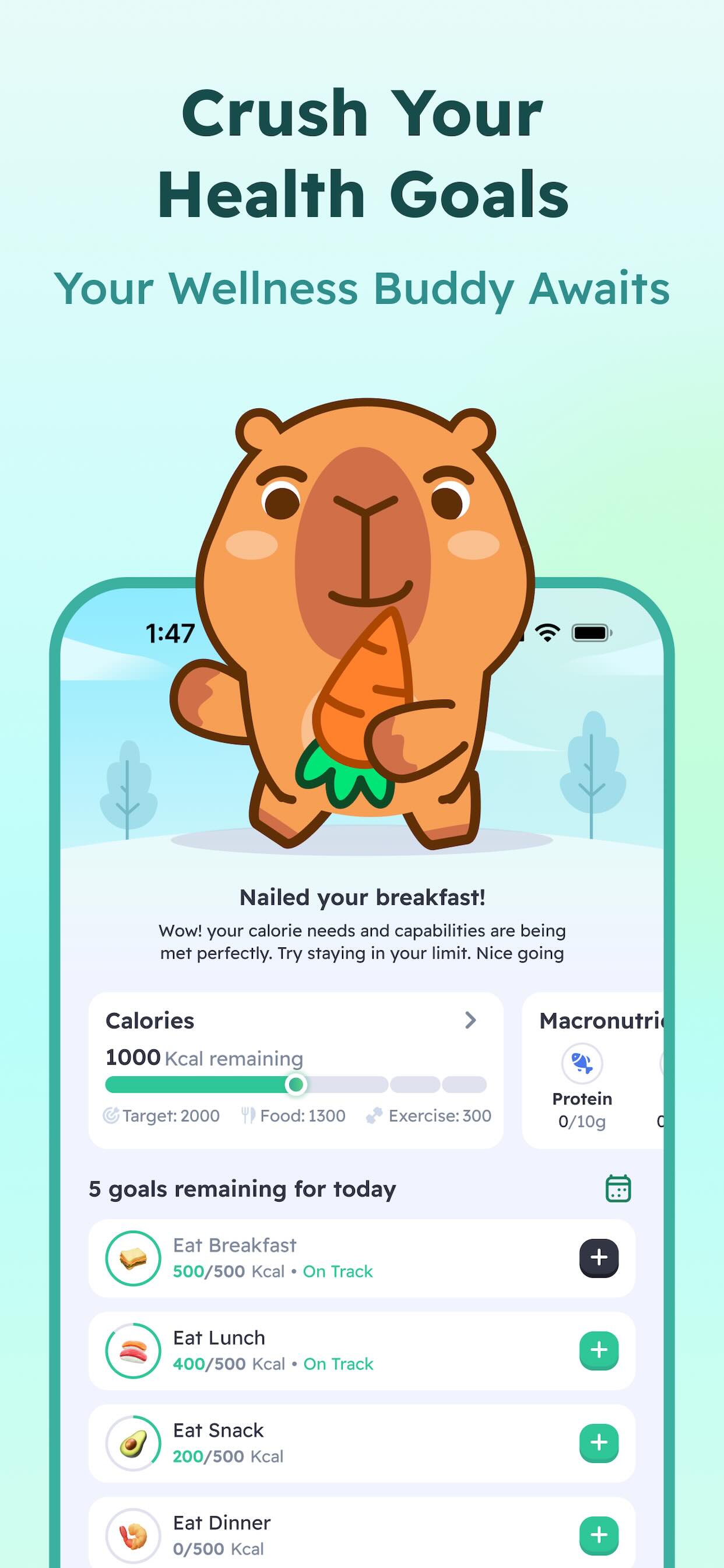
You still get the insights and awareness (the good stuff), but without the tedious data entry. Feel good about what you're eating, not guilty about the process.
Stop squinting at nutrition labels
CapyCal's photo AI logs your food in seconds—no more manual entry, no more confusion.
Download CapyCalPutting It All Together: A Real-World Example
Let's say you're looking at a cereal box. Here's what you'd check:
- Serving size: "1 cup" (or about 40g). Are you eating one cup or two? Adjust numbers accordingly.
- Calories: 150 per serving. Is that paired with enough protein (like from milk) to keep you satisfied, or are you going to be hungry 2 hours later?
- Macros: 3g protein, 30g carbs, 2g fat. This is pretty carb-heavy with minimal protein. You might add Greek yogurt for more staying power.
- Fiber: 5g. Nice—that's helpful for keeping you full.
- Added sugar: 12g. This is a fair amount. If you like it and it fits with the rest of your day, go for it. If you're trying to stabilize your energy, you might look for something with less.
"Reading a nutrition label isn't about being perfect. It's about understanding what you're eating so you can make choices that feel good for your body and your life."
Final Thoughts: Knowledge is Power
You don't need to memorize every nutrient or analyze every food. But the more you understand about nutrition labels, the more confident you'll feel making food choices. You're not trying to be "perfect"—you're trying to feel good.
Next time you're in the grocery store and you see a nutrition label, you'll know exactly what those numbers mean. And if you want to make the process even easier? Let CapyCal handle the logging while you focus on how different foods actually make you feel.
Because that's what it's really about: feeling good, not guilty. That's the CapyCal way.

Meet Capy
Your friendly wellness companion who believes in feeling good, not guilty.
Ready to feel good about your food?
CapyCal makes nutrition tracking effortless. Snap. Log. Feel good.

Available on iOS • No judgment, just good choices